
Today the first version plays. A computer the size of a stick of gum, a small amplifier, a speaker and five buttons on a breadboard, playing a podcast out loud. The code, a 3D model of the case and the setup notes are saved together on GitHub, and the notes open with my best troubleshooting advice: if anything breaks, reboot and keep going.
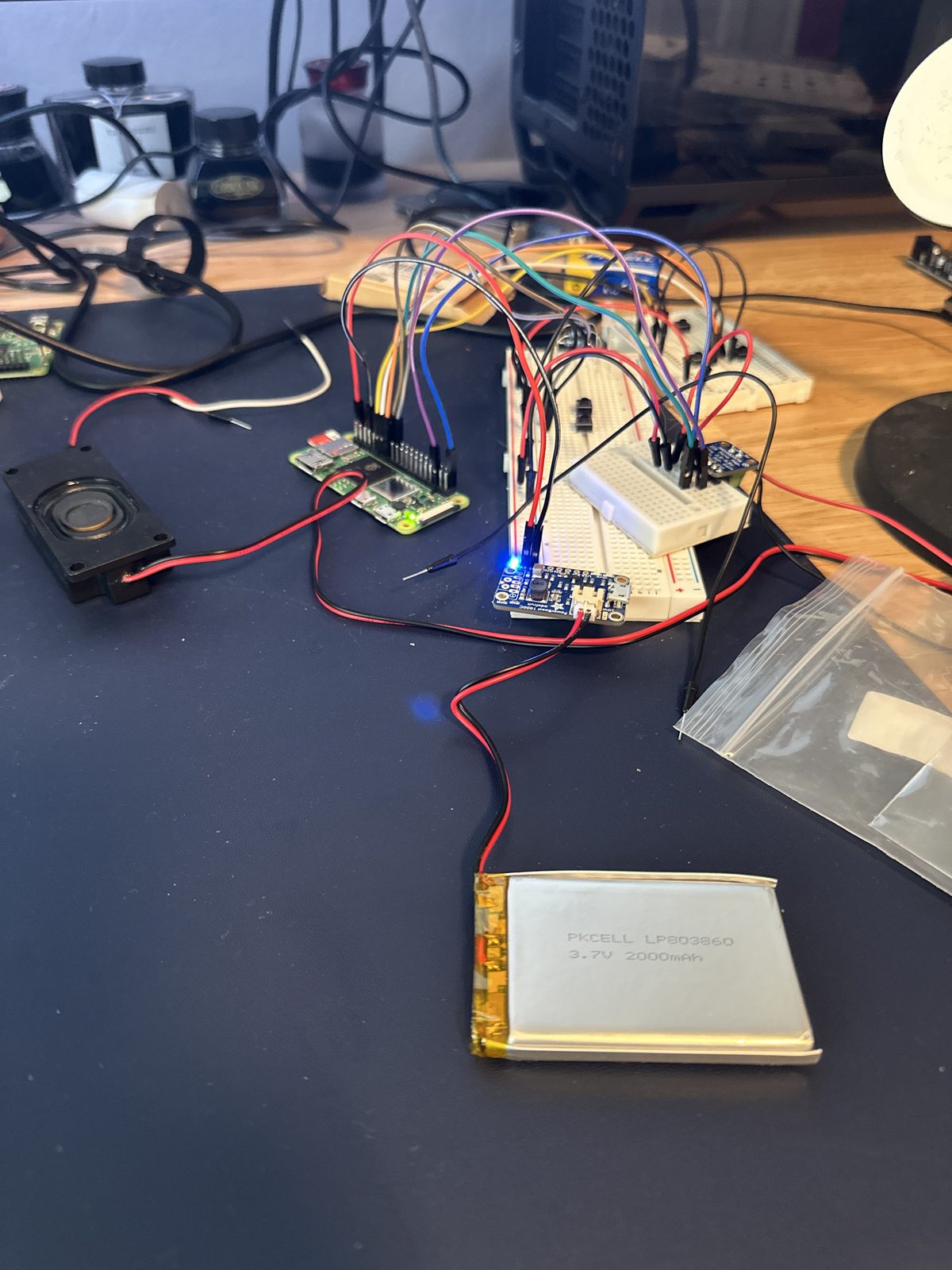
The parts on the breadboard, July 10, 2025: the Raspberry Pi, the amplifier board, a speaker, and a flat battery.
What it does matters more than what it’s made of. It downloads the newest episodes of a show before it plays them, so it keeps playing with no internet. That was the first requirement, because of the parking garage. It remembers where you were, even after it’s unplugged, and it starts on its own when you plug it in. No keyboard, no screen, no phone.
Three weeks ago I handed the cardboard version of the sketch to my son. I’d been telling him I was building an audio device, and he asked, is this the audio device? Then he tried to press the buttons, which don’t press, and squished it. It was too big for his hands, and I need a better way to prototype with a toddler.
So the case is the June sketch drawn in 3D: grille at the top, previous and next, the big play button. I wrote it in OpenSCAD, which builds the shape from code. Last week the first front came off the printer in red. It’s still the sketch, but now you can hold it.
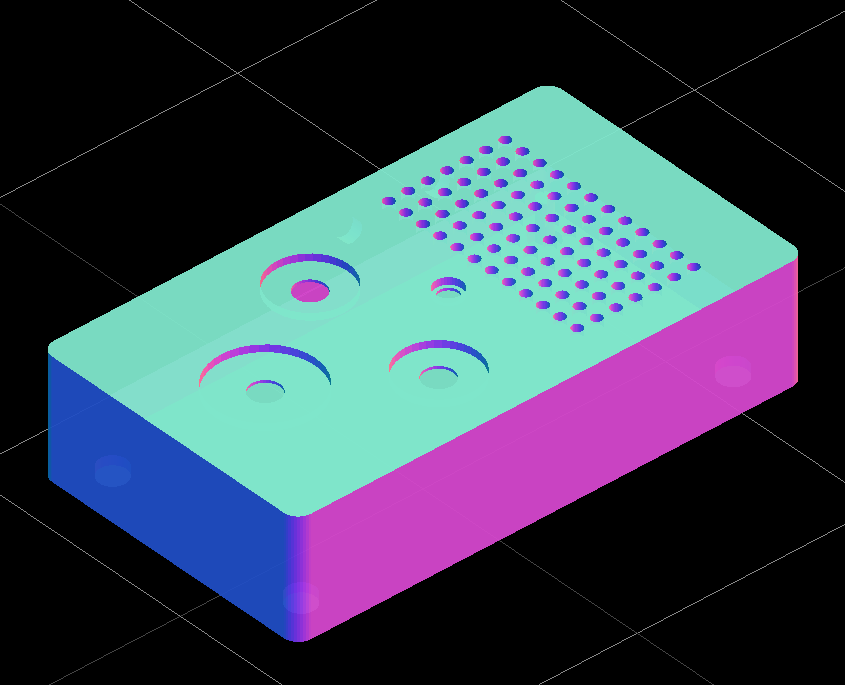
The shell in OpenSCAD. A render, not a print: the grille, the light, previous and next, play, and the two volume holes in the side.
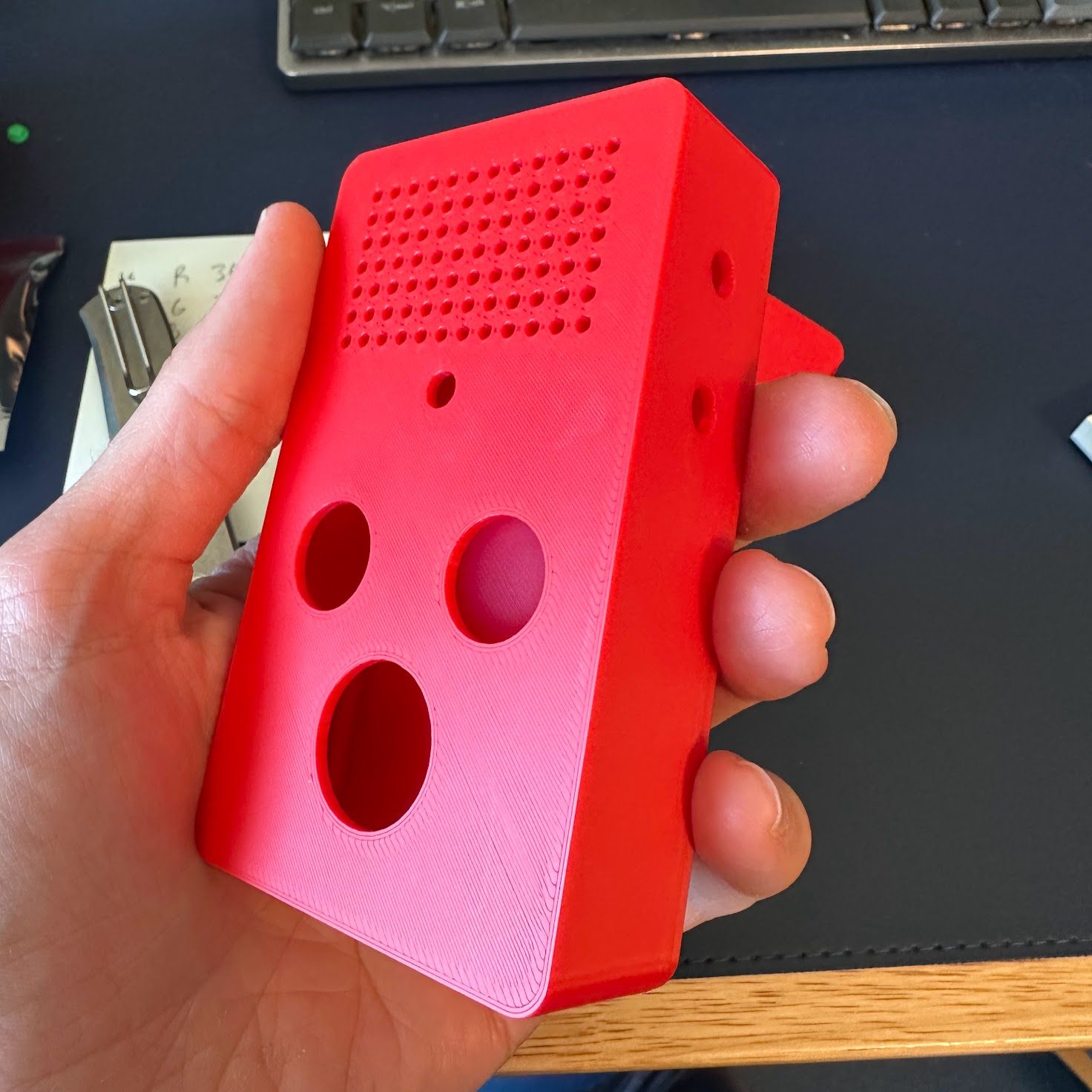
The first red front shell, July 16, 2025.
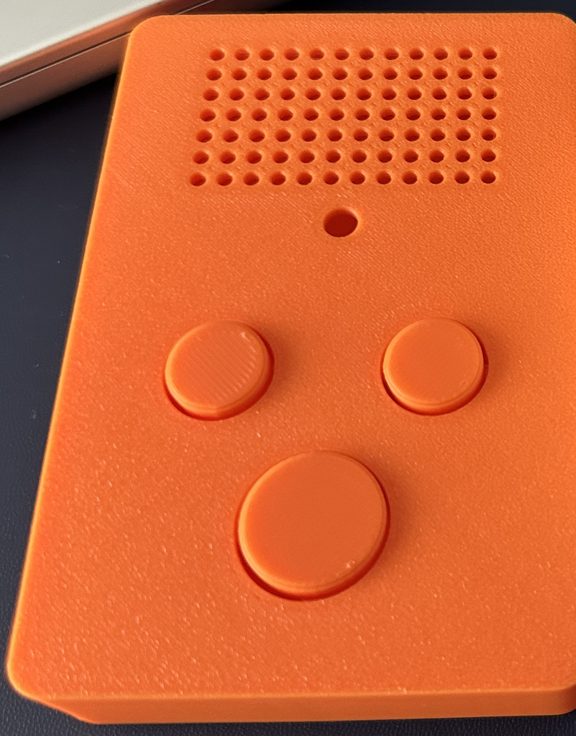
The orange print with its buttons in, July 19, 2025.
Next: getting everything inside. The case is too thin for the parts and the wires, and there’s no battery yet. The box is going to get deeper before it gets smaller.