
Today I started drawing a podcast player for kids. A notebook, a pencil, and a few pages of shapes.
The reason to try is two months old. A Toniebox with a brand-new figure on it refused to play in a hospital parking garage. The figure is only a key: the story itself has to come down from a server the first time, and neither a hotspot nor the hospital Wi-Fi could reach it. The story was paid for, and the box did nothing. Every player I have looked at since has the same shape: a locked library, a fee per story, and anything a family already owns is more trouble to load than it is worth. So: a player that plays what you have, and keeps playing when the internet is not there.
The obvious objection is that everyone has a phone, and a phone already does this. Last week I almost talked myself out of it on exactly that. But a phone in a toddler’s hands is a screen, a camera and every app in the world. This would be a player and nothing else: small enough to carry, worked by hand, with no screen if I can manage it. Whether that’s different enough is a question I’ll keep coming back to. I’m building it anyway.
The first sketch is my iPhone traced onto the page, portrait, with a speaker at the top and a big round play button in the middle. Too big, with plenty of room inside. The next page shrinks it, and squeezes in a small display, which argues with the no-screen idea. Undecided.
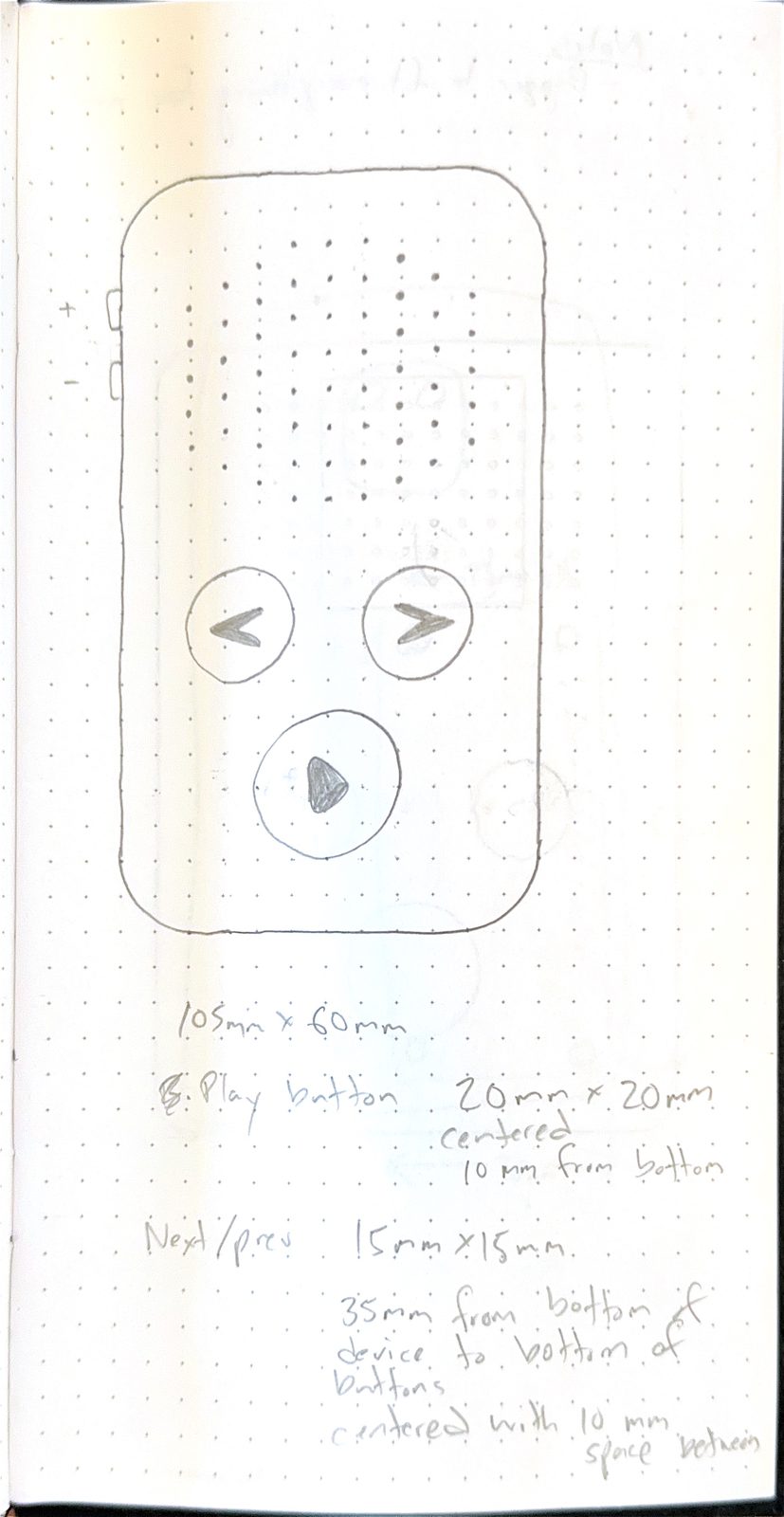
The shorter sketch, June 20, 2025.
Then a page on whether the small computer inside, a Raspberry Pi, can fit at all, and a page with a knob: turn it for volume, press it to play. Whether a two-year-old understands a knob is something I can test at home.
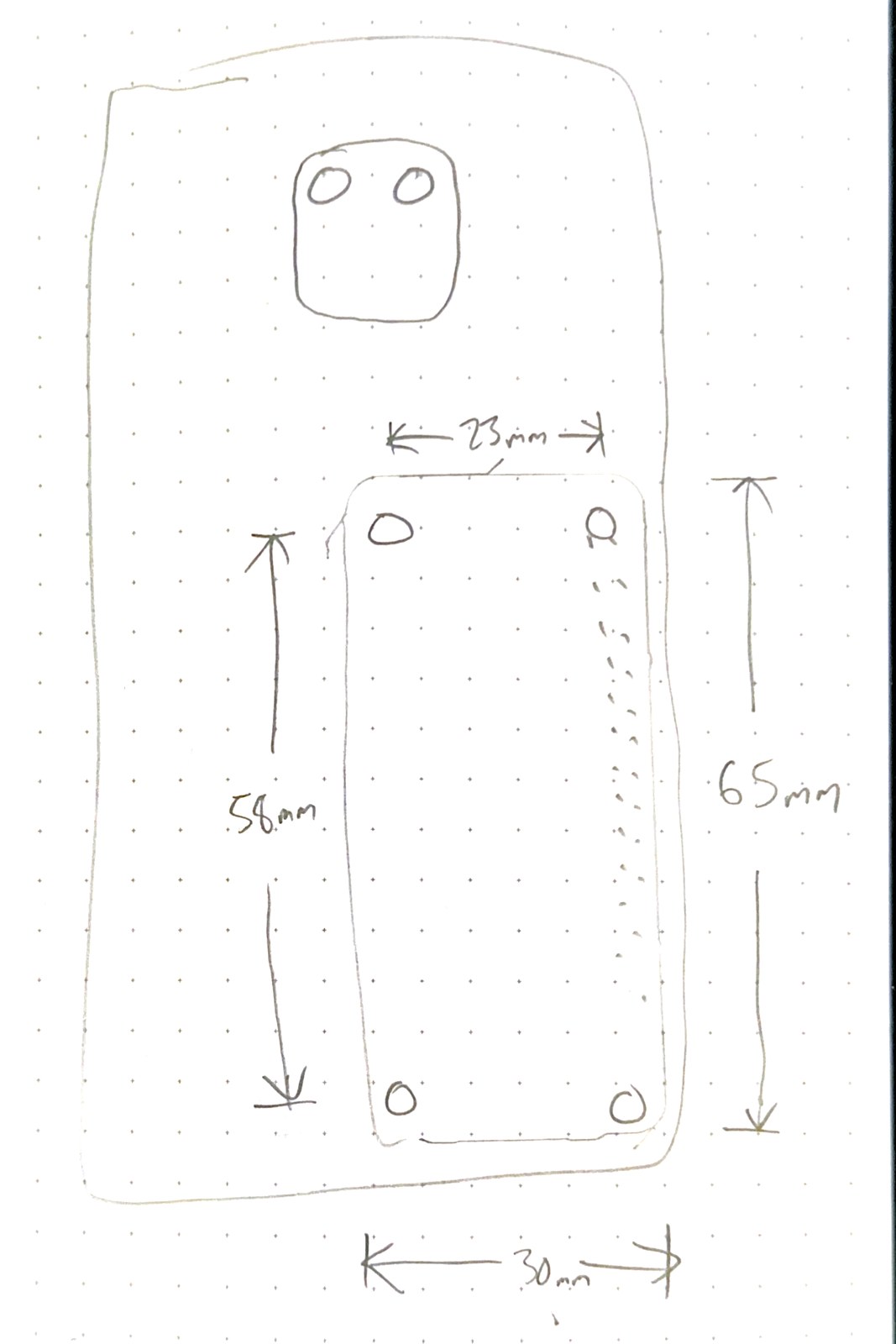
What has to fit: the Raspberry Pi’s mounting holes, in a body barely taller than the board.
Next: a quick test before any real design work. A Raspberry Pi, a small amplifier and a speaker on a breadboard, playing a podcast. And the sketch in cardboard, to see how it sits in a small hand.
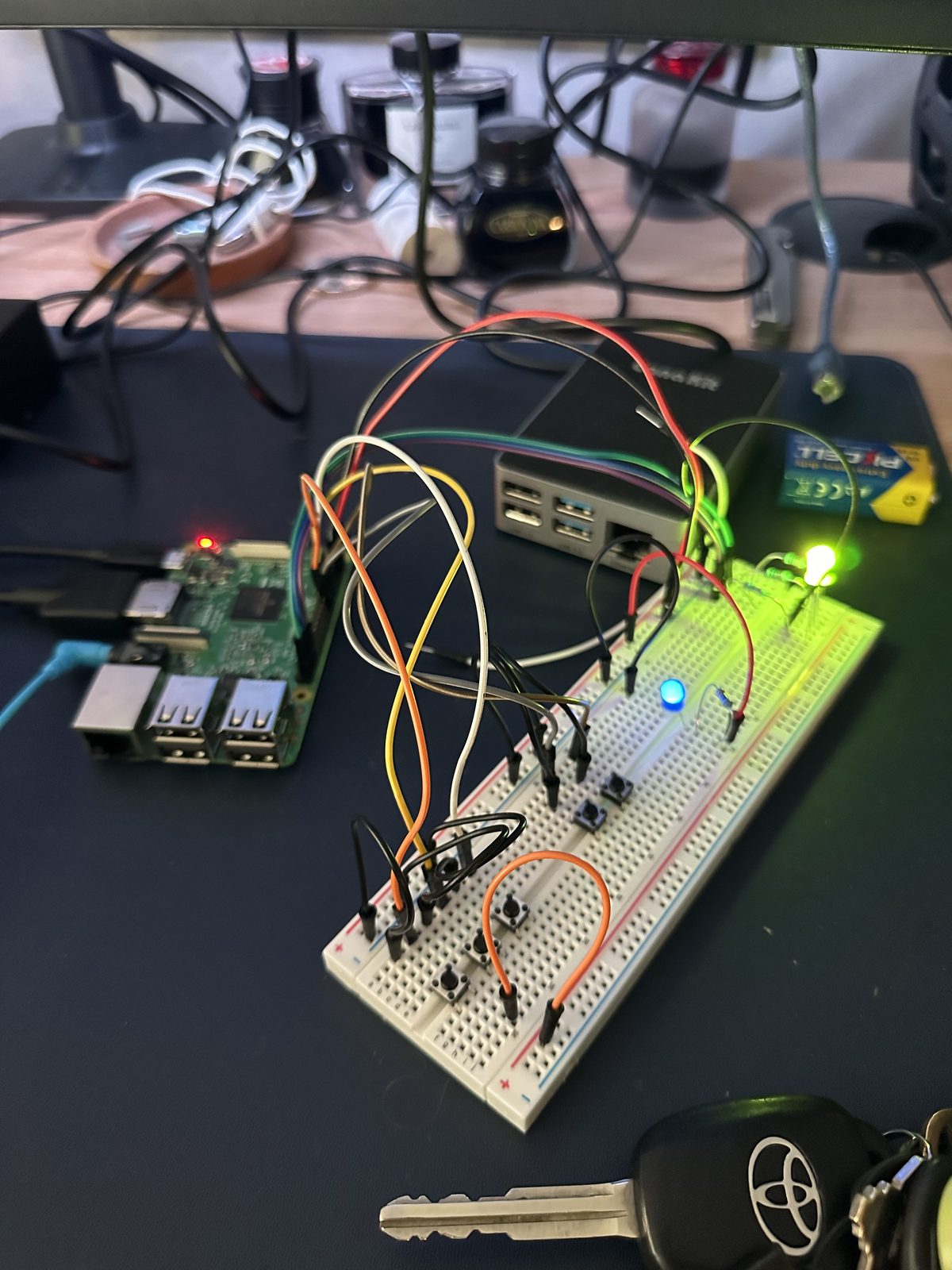
A week later, a Raspberry Pi wired to buttons and two LEDs on the breadboard.
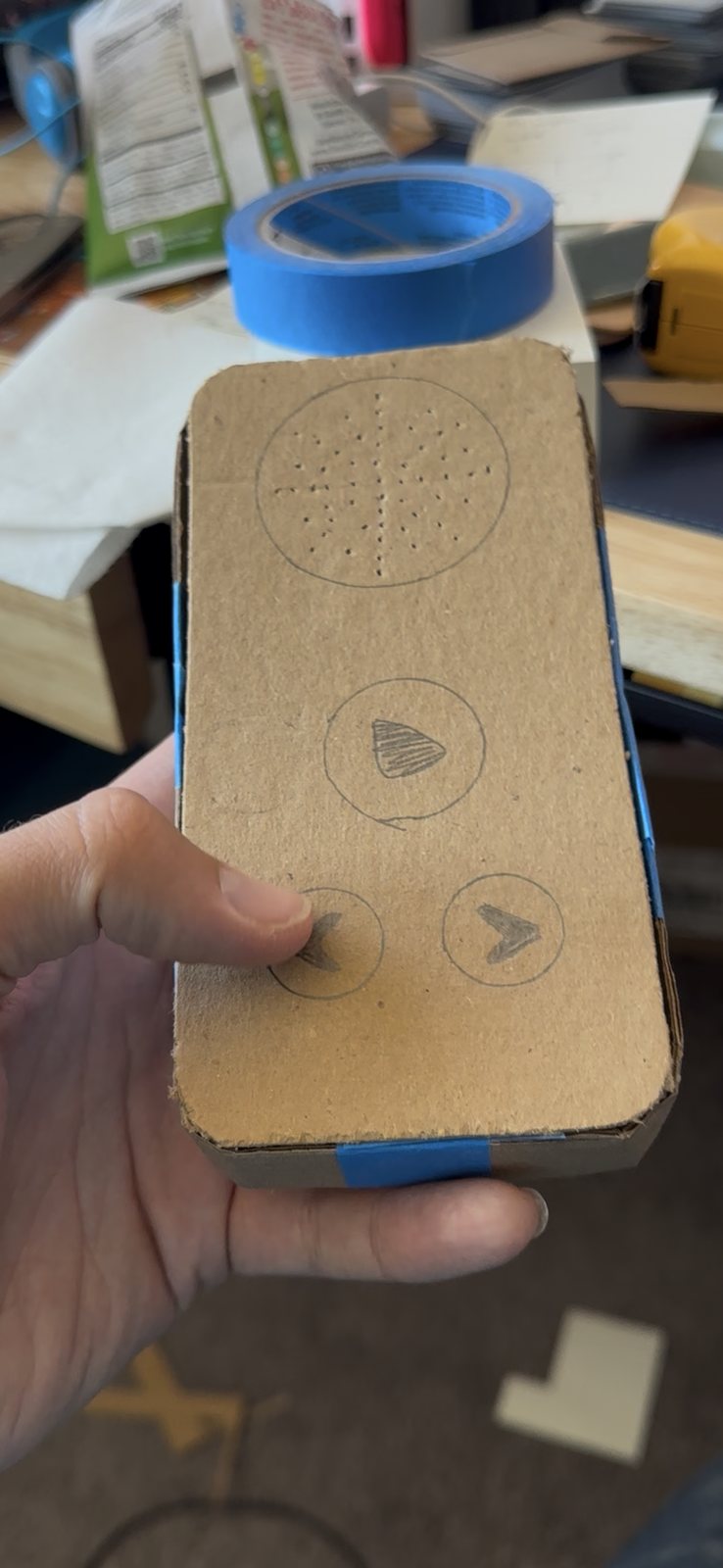
The sketch in cardboard, held together with painter’s tape.