
Today I picked a direction for how Robi’s code and design files get shared. This decision has been on the calendar five times since June and slipped five times. Today it came together in about an hour. Once there was a written policy to argue with, it went fast.
The starting point is simple. A parent should own their Robi. If kid.studio doesn’t survive, the player shouldn’t turn into a brick. And anyone who wants to tinker with it, fix it or build their own should be able to.
My first draft made everything fully open on day one. I’ve landed somewhere in between. At launch there’s nothing to stand on yet: no content library, no users, no community. The conundrum is making money, and I’d like this to still be around in a few years.
So the firmware and the companion app get published for anyone to read, build and change for their own use. The one thing they can’t be used for, for two years, is a competing product. On each version’s second birthday, it converts to a standard open license (Apache-2.0). This model has a name (fair source), and others already use it. Sentry is one, under the Functional Source License. The hardware works the same way. The board files, the parts list and the printable shell are free for personal, noncommercial use, and they become fully open two years after they’re published (CERN-OHL-S). How the phone talks to the player gets documented openly, so anyone can write their own app.
One guiding example is Raspberry Pi: a foundation and a company, side by side. It would be cool to have something like that someday. I’m not there. It’s still just me. But I want to set this up in a way that shows the intent and the path forward, and that delivers in good faith what I’d want as a parent.
I want the dates written into the license itself, so you don’t have to take my word for when the restrictions end. Right now the code on GitHub is still private and has no license file. That work is ahead, and I won’t call it available until it is.
The maker path follows from this. Print a shell, buy a Raspberry Pi, flash the image, and build one for your own family. That doesn’t have to wait two years. Most people will just buy the player, and a small group will want a kit. Either way, the aim is for this path to exist even if a Kickstarter doesn’t fund.
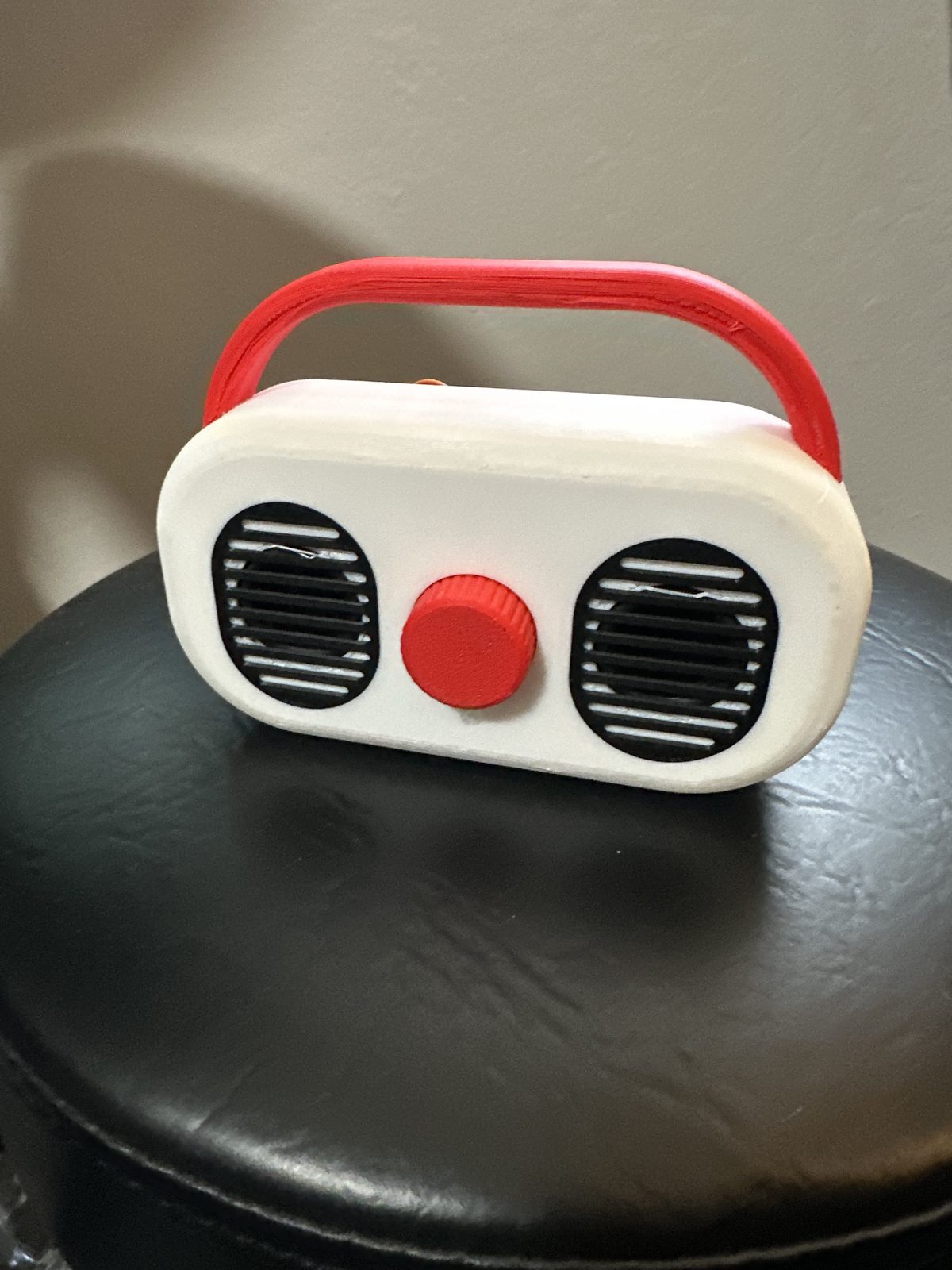
A printed shell on a stool, August 5, 2026. The shell files are on the list to publish.
This is a working version, not the final word. It’s the direction I’m heading, and I’m open to changing it. My guess is that families on the waitlist care more about no lock-in, about being able to tinker, and about a player that outlives kid.studio than about the name of the license. I’ll test that in interviews, and as the first players and the app get closer to launch, the parents using them will shape how this evolves.