
This week the app learned to make stories, and the first boombox came off the printer.
There are two ways to make a story now. In the first, a parent types a child’s name, an age and a theme, AI writes a short story around them, and a synthetic voice reads it. In the second, a parent records themselves reading, and can trim mistakes and add a short dedication. Either way, it lands on the player like any other episode.
The first test of the recorder wasn’t a story. It was a message, recorded in the bedroom while the player was on in the living room: get dressed, we leave in ten minutes. Queued to play next. From the other room, a shout: “Okay, Baba!” (Baba is what my son calls me.)
The print was meant to be bone white and came out clear, because the wrong spool was loaded. The mistake helps: you can see where the parts will sit. Two oval grilles, a fixed handle with room for four fingers, the red knob in the middle. It’s smaller in the hand than I expected.
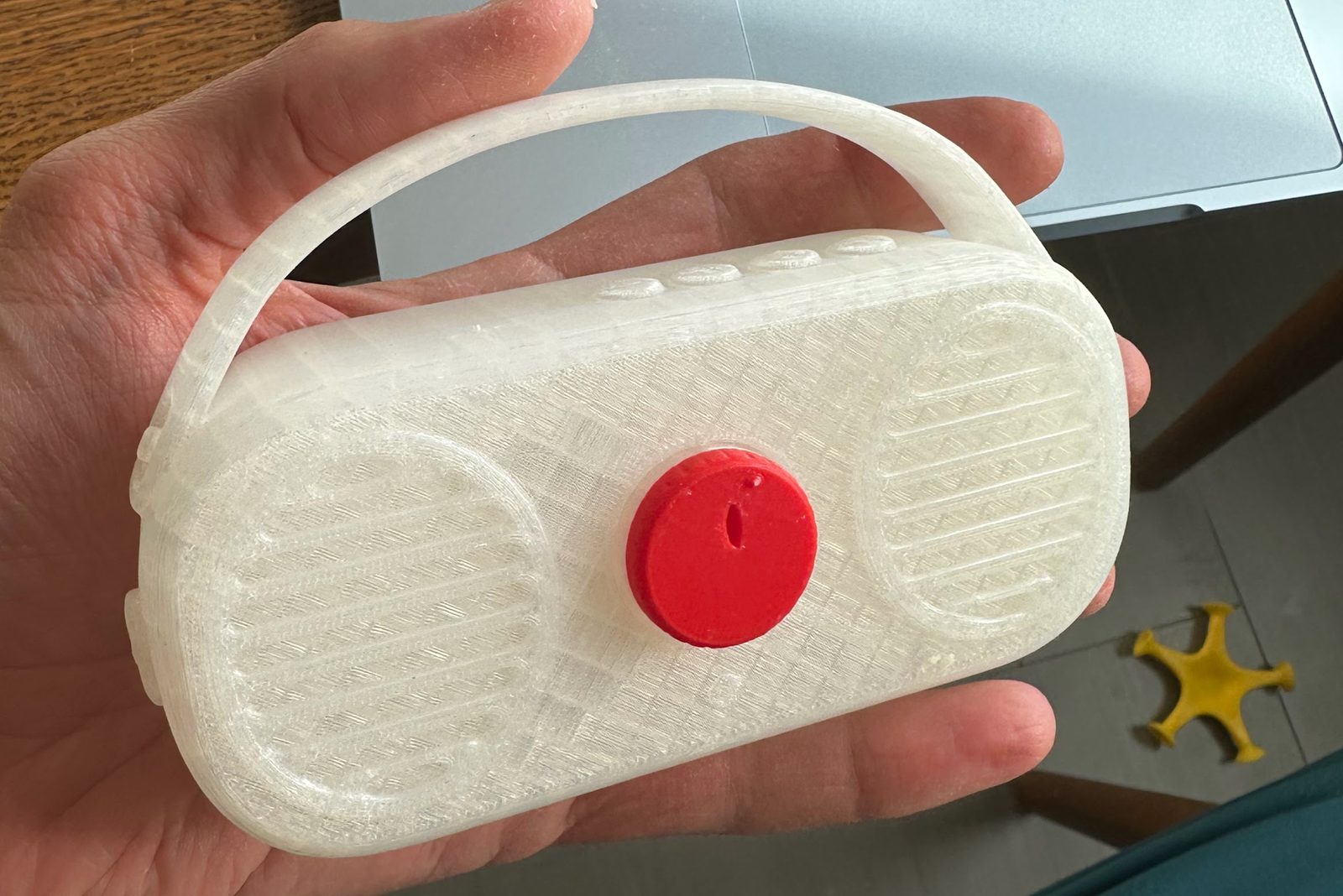
The first boombox print, March 26, 2026.
My son got it first. He looked at it and asked, is this the audio device? The first prototype he was ever handed was cardboard, and he squished it. This one doesn’t work yet, and he still knew what it was.
Where things stand: the app, the player and the connection between them work as a product. Not a polished one. A parent can add what they want from a phone, a kid can press play, and it keeps playing. My wife, Helena, whose default with my projects is hard questions, has started suggesting features instead. For the first time I’m bullish on this, not just hopeful.
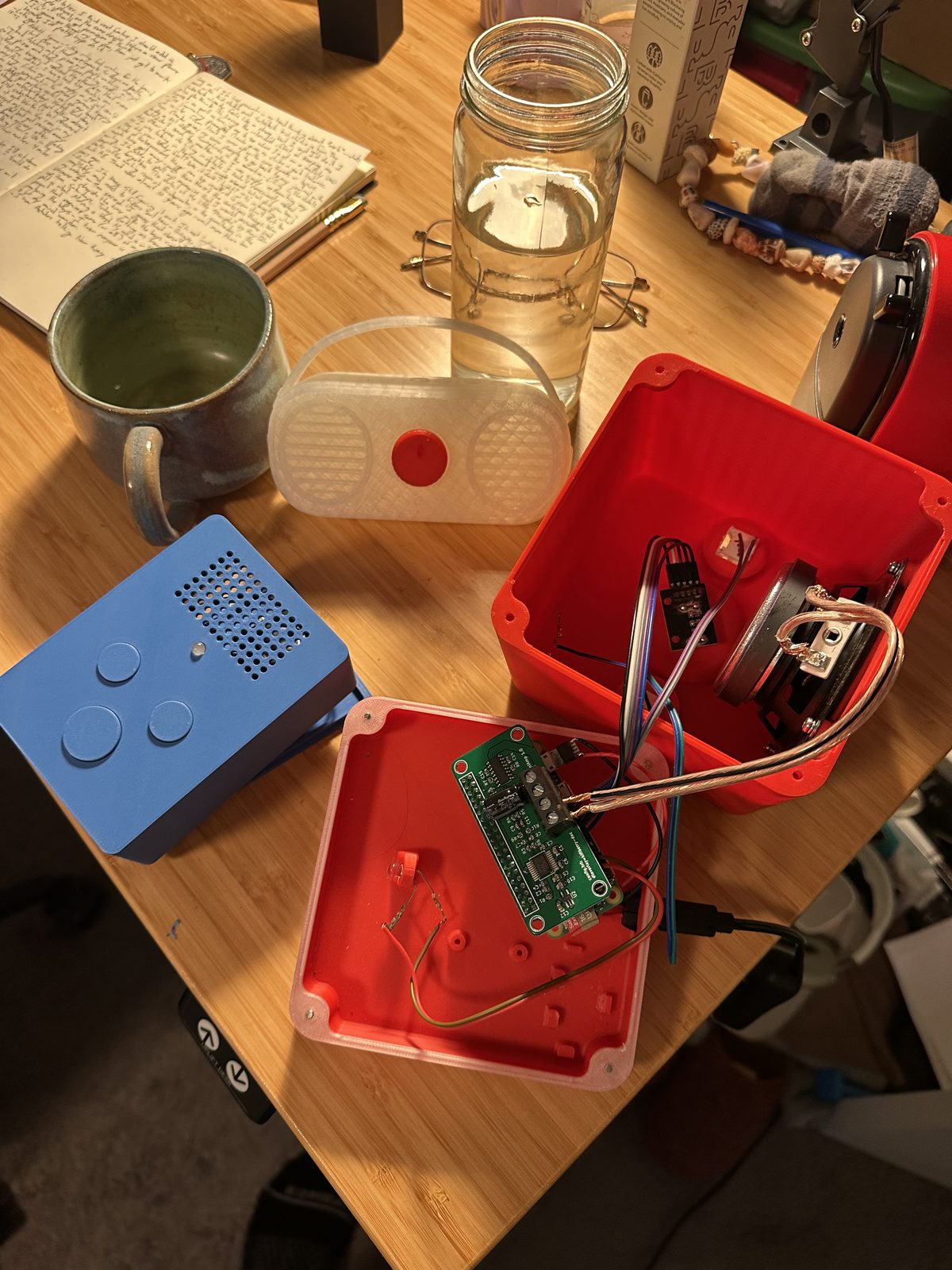
The desk on March 28, 2026: the notebook, the blue handheld, the red box open, and the first boombox print.
Next: a real circuit board instead of a stack of hobby boards, probably a different computer inside, and a body that survives a toddler. The aim is a few families testing by May.